
 By Shannon Rivera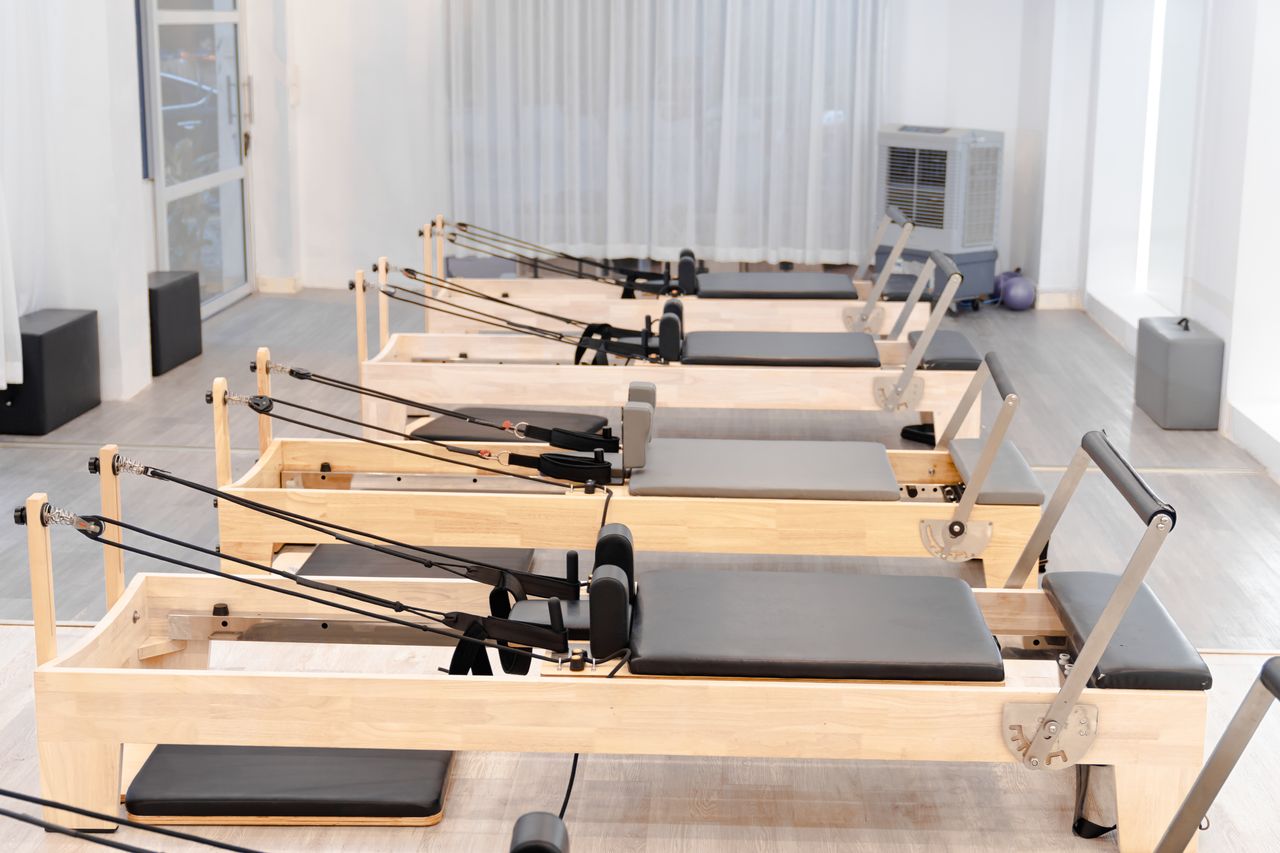
Fitness trends come and go, but some approaches continue to grow because they offer something different from the traditional gym experience. Reformer Pilates is one example. What began as a specialized form of exercise has become increasingly popular among people looking for a workout that combines strength, mobility, balance, and controlled movement.
The popularity of pilates reformer classes reflects a broader shift in how people think about fitness. Instead of focusing exclusively on lifting heavier weights or exercising at higher intensity, many people are looking for workouts that challenge the body while emphasizing technique and control.
What Is Reformer Pilates?
The Pilates reformer is a specialized piece of equipment designed to support a variety of controlled movements.
It includes a moving carriage, springs that provide resistance, a footbar, and straps that can be used with the hands or feet. The equipment allows exercises to be performed with different levels of resistance and in a variety of positions.
Unlike a conventional weight machine, the reformer can be used for movements that challenge several aspects of fitness at once.
Exercises may require strength, balance, coordination, flexibility, and concentration. The equipment also provides feedback that can help participants become more aware of how their bodies are positioned during each movement.
Strength Without Traditional Weightlifting
Strength training does not have to mean lifting barbells or dumbbells.
The reformer uses spring resistance to create a different type of challenge. Participants may have to control the movement of the carriage while maintaining proper positioning throughout an exercise.
Because the resistance can be adjusted, exercises can often be modified to create different levels of difficulty.
This makes reformer-based exercise interesting for people who want to develop strength but prefer an approach centered on controlled movement rather than traditional weightlifting.
Why Control Matters
One of the defining characteristics of Pilates is its emphasis on controlled movement.
Rather than rushing through repetitions, participants are encouraged to pay attention to how an exercise is performed. Breathing, alignment, stability, and range of motion can all become part of the exercise.
That attention to technique can make relatively small movements surprisingly challenging.
It also changes the mindset of a workout. Instead of simply counting repetitions, participants may become more focused on performing each movement with precision.
A Workout That Challenges More Than One Area
Many traditional exercises focus primarily on one type of physical ability. Reformer Pilates can combine several elements within a single session.
A movement may require the legs to generate force while the core stabilizes the body and the arms maintain control. At the same time, the participant has to coordinate breathing and movement.
This combination can create a workout that feels different from conventional cardio or strength training.
The goal is not necessarily to exhaust one particular muscle group. Instead, exercises can challenge the body as a coordinated system.
Mobility and Flexibility
Strength is only one component of physical fitness. Mobility and flexibility also play important roles in how people move.
Many reformer exercises take the body through controlled ranges of motion. Depending on the exercise, participants may work on areas such as the hips, shoulders, spine, and legs.
Regular movement through appropriate ranges can help people become more aware of their mobility and how comfortably they move.
This is particularly relevant for people who spend much of their day sitting at a desk or performing repetitive activities.
The Appeal of a Structured Class
Another reason reformer Pilates has attracted attention is the structured nature of classes.
Walking into a large gym can sometimes leave people wondering what they should do next. A reformer class provides a defined session with an instructor guiding participants through a sequence of exercises.
That structure can make it easier for people to commit to a routine.
Small-group settings can also provide opportunities for instructors to offer individual guidance and adjustments based on a participant’s experience and ability.
Pilates and the Modern Fitness Mindset
The growth of reformer Pilates is part of a broader change in how people approach exercise.
For years, fitness culture often centered on intensity, calories, and visible physical results. Those goals remain important to many people, but there is increasing interest in movement quality and overall physical capability.
People may want to feel stronger without constantly pushing themselves to exhaustion. They may want better mobility while maintaining an active lifestyle. They may also appreciate workouts that require concentration rather than simply repeating the same movements.
Reformer Pilates fits naturally into this broader approach.
It Does Not Have to Replace Other Exercise
Trying reformer Pilates does not mean giving up other forms of exercise.
Someone might combine Pilates with walking, running, cycling, strength training, swimming, or recreational sports. Different forms of exercise can address different aspects of fitness.
For example, cardiovascular activities can help develop endurance, while resistance training can provide a different type of strength stimulus. Pilates can complement those activities by emphasizing controlled movement, stability, coordination, and mobility.
The best routine is often one that includes different types of movement and can be maintained consistently.
Finding a Sustainable Approach to Fitness
The most effective workout routine is not necessarily the most extreme one. It is often the one that someone can consistently incorporate into everyday life.
Enjoyment matters. Convenience matters. The ability to adjust exercises to different experience levels matters.
For some people, reformer Pilates provides an appealing combination of structure, challenge, and variety. The equipment creates opportunities to progress, while the focus on controlled movement keeps each session engaging.
A New Perspective on Exercise
The growing interest in reformer Pilates illustrates how fitness continues to evolve.
People are increasingly exploring forms of exercise that do more than simply make a workout difficult. They are looking for ways to develop strength, mobility, balance, coordination, and body awareness while making exercise an enjoyable part of their lifestyle.
Whether someone is completely new to Pilates or already has experience with other forms of exercise, the reformer offers a distinctive way to approach movement.
Rather than asking how hard a workout can be, the reformer Pilates approach encourages a different question: How well can you move?
That shift in perspective may be one reason this style of training continues to attract people looking for a more thoughtful approach to fitness.